

Performance Testing & Assessment
You can't train what you can't measure. Let's find your baseline.
The gold standard for assessing aerobic fitness. Measures your maximum oxygen uptake, anaerobic threshold and maximal aerobic power to establish precise training zones.
Blood lactate analysis to determine the exercise intensity at which lactate begins to accumulate — a critical marker for endurance performance and training prescription.
Clinical-grade body composition analysis measuring bone density, lean muscle mass and fat distribution. Invaluable for tracking changes in body composition and assessing bone health.
Maximal short-duration power output testing to assess your explosive capacity — particularly relevant for sprint and team sport athletes.
Safe, non-maximal aerobic capacity assessment for athletes with cardiovascular risk factors or those seeking a practical fitness baseline without maximal exertion.
Performance Testing
Objective Testing for Serious Athletes and Active Individuals
Performance testing is the foundation of intelligent training. Without knowing your physiological benchmarks, training is guesswork. At SSEP, we use laboratory-grade testing protocols to deliver precise data on your aerobic capacity, lactate thresholds, anaerobic power and body composition — giving you and your coach the information needed to train smarter, not just harder.
Our testing services are available to athletes at all levels — from competitive age-groupers and serious amateurs to elite athletes and professional sporting teams. We currently work with Sydney FC and the Sydney Thunder.
The Benefits of Performance Testing
Investing in performance testing pays dividends across every aspect of your training, recovery and competition preparation. Here's what it delivers:
Precise, personalised training zones
Generic heart rate formulas and perceived exertion are imprecise at best. Testing gives you and your coach exact, individually determined training zones — so every session is calibrated to produce the adaptation you're actually targeting, whether that's aerobic base, threshold development or high-intensity capacity.
A clear physiological baseline
Before you can improve, you need to know where you stand. A baseline test documents your current aerobic capacity, power outputs and body composition — creating a benchmark against which every subsequent test can measure real progress, not just perceived improvement.
Smarter program design
Testing reveals where your strengths and limiters actually lie — whether you're aerobically underdeveloped, limited by a low anaerobic threshold or losing ground in body composition. This allows your EP or coach to design a program that targets the right qualities, at the right time, rather than training generically and hoping for the best.
Measurable progress over time
Repeat testing — typically every 8–16 weeks depending on your training phase — shows exactly how your physiology is adapting. Rather than relying on race results or subjective feel, you have objective data showing whether your VO2 max has improved, whether your lactate threshold has shifted and whether your body composition is moving in the right direction.
Reduced injury risk and overtraining
Training too hard too often is one of the most common causes of overuse injury and burnout. Knowing your precise physiological thresholds means you train at the right intensity for the right purpose — accumulating the stimulus you need without the unnecessary load that leads to breakdown.
Confidence on race day and in competition
Athletes who know their numbers compete with greater confidence. Understanding your sustainable power output, your threshold pacing and your fuel use at different intensities takes the guesswork out of race execution and tactical decision-making.
Testing Services We Offer
In addition to one-on-one consultations, we provide laboratory-grade testing protocols across five key areas of athletic performance.

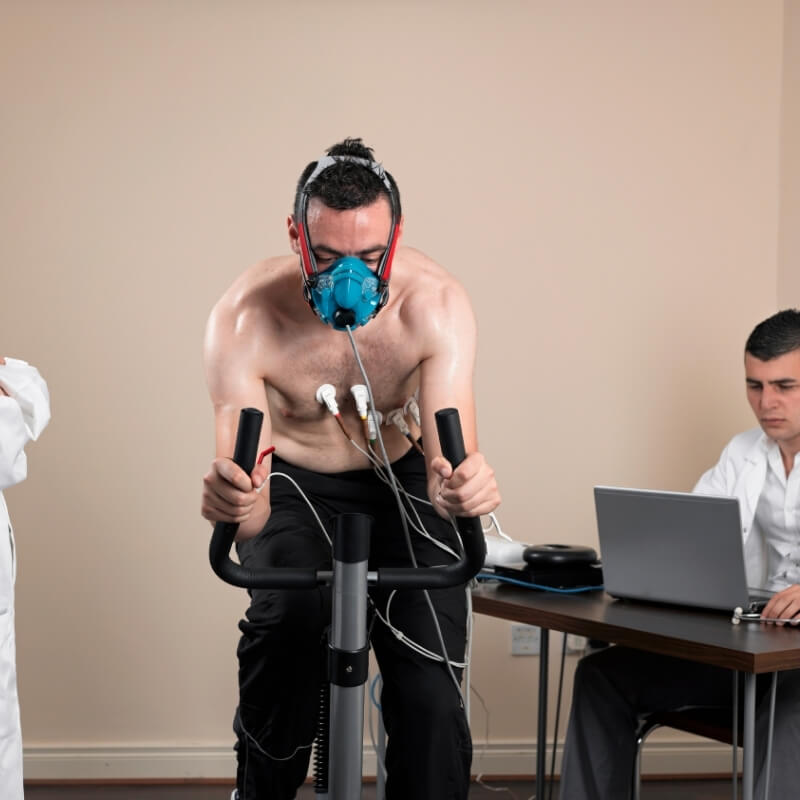
VO2 Max & Threshold Testing
The gold standard for assessing aerobic fitness. Measures your maximum oxygen uptake, anaerobic threshold and maximal aerobic power to establish precise training zones and monitor progress over time.

Lactate Threshold Testing
Blood lactate analysis to determine the exercise intensity at which lactate begins to accumulate beyond clearance rate — a critical marker for endurance performance and training prescription.
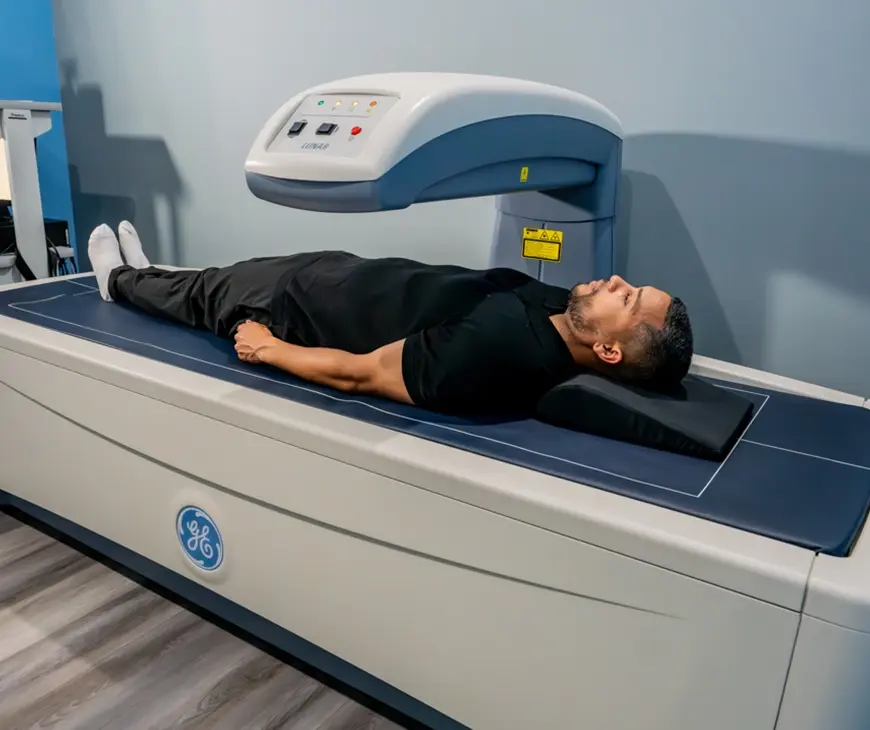
DEXA Scan
Clinical-grade body composition analysis measuring bone density, lean muscle mass and fat distribution with precision. Invaluable for tracking changes in body composition and assessing bone health.

What Every Package Includes
Each testing package includes a comprehensive written report with your results, personalised training zone calculations and evidence-based recommendations. A one-on-one debrief with your EP to translate findings into your training plan is included.

Who Is Performance Testing For?
- Endurance athletes — runners, cyclists, triathletes, swimmers and rowers wanting precise training zones
- Team sport athletes — football, rugby, basketball, cricket and other codes requiring repeat-effort conditioning
- Strength and power athletes benchmarking explosive capacity and body composition
- Coaches wanting objective physiological data to guide their athletes' programming
- Health-conscious individuals wanting a clinically accurate baseline of their cardiovascular fitness and body composition
- Patients commencing an exercise rehabilitation or chronic disease management program who need a safe, objective starting point
If you're unsure whether our services are right for you, our team is happy to help guide you.
Contact a Team MemberWhat to Expect
Every performance testing appointment at SSEP follows a structured process designed to make your results as accurate and actionable as possible:
Initial Consultation
Your EP reviews your training history, health background and performance goals, and confirms the most appropriate test protocol for your needs.
The Test
Conducted in a controlled clinic environment using calibrated equipment. Each protocol is explained clearly before you begin. Your EP supervises the entire session.
Your Report
A comprehensive written report detailing your results, personalised training zone calculations and evidence-based recommendations is prepared following your test.
Results Debrief
A one-on-one session with your EP to walk through your results, answer your questions and translate the data into a clear training plan or program adjustment.
Regular reassessment ensures your program evolves with you, keeping progress on track and outcomes measurable.
How Often Should You Test?
- Baseline test before commencing a new program or training cycle
- Repeat testing every 8–16 weeks to monitor adaptation and update training zones
- Pre-season testing to establish competition-readiness benchmarks
- After significant illness, injury or extended breaks from training to rebase your zones before returning to structured loading
Your EP will advise the optimal testing schedule based on your individual situation during your initial consultation.
Contact a Team Member